Contents
Tags

iPhone Duo: Price, Specs and Release Date Explained
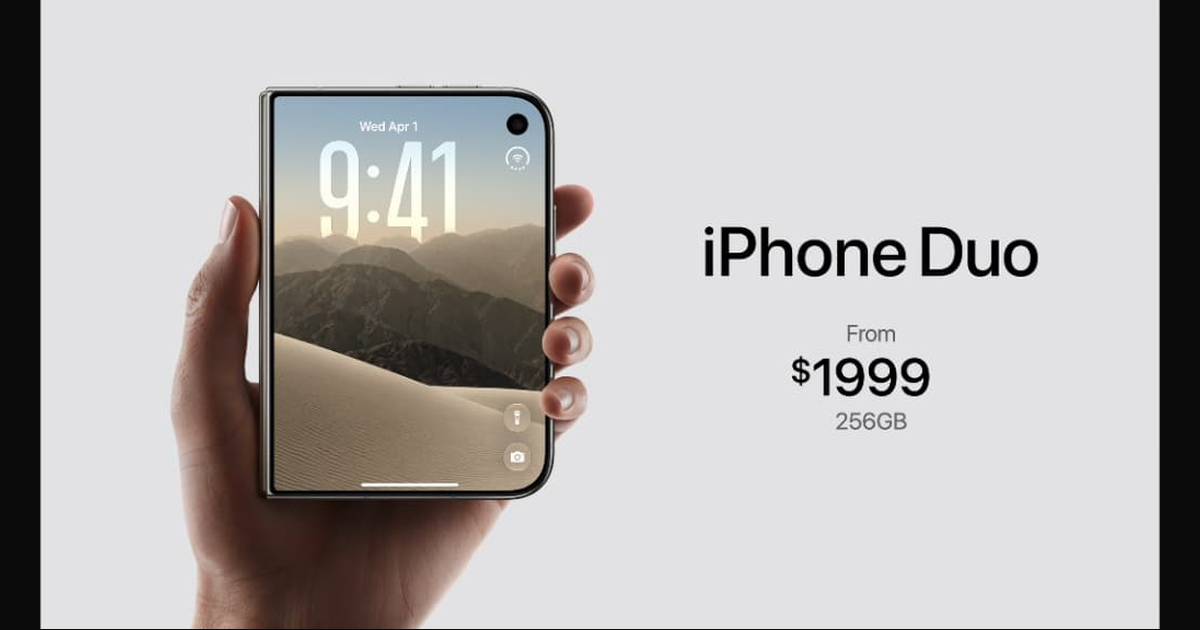
Apple announced the iPhone Duo tonight - the first foldable iPhone, and the largest iPhone display the company has made. It opens to a 7.6-inch inner screen, closes to a 5.4-inch outer one, starts at $1,999 for 256 GB, and goes on pre-order on Friday 16 October ahead of general availability on Friday 23 October.
Here is everything Apple actually published about it, section by section.
The two displays
Both panels are Super Retina XDR. The inner display measures 7.6 inches diagonally, which Apple puts at 50 percent more screen area than an iPhone 18 Pro Max and 80 percent more than an iPhone 18 Pro. The 5.4-inch outer display carries roughly 90 percent of the screen area of a standard iPhone 18 Pro, so the closed device is a full-sized phone rather than a cover panel you tolerate until you open it.
The two share an aspect ratio, which is the detail that matters day to day: an app laid out for one is laid out for the other, and unfolding does not reflow everything you were looking at.
- ▸ProMotion, with a variable refresh rate up to 120 Hz on both displays.
- ▸Always On, again on both.
- ▸3000 nits of peak outdoor brightness.
- ▸A custom nano-texture finish on the inner display, which cuts glare and - usefully - makes the fold line harder to catch in reflected light.
The hinge
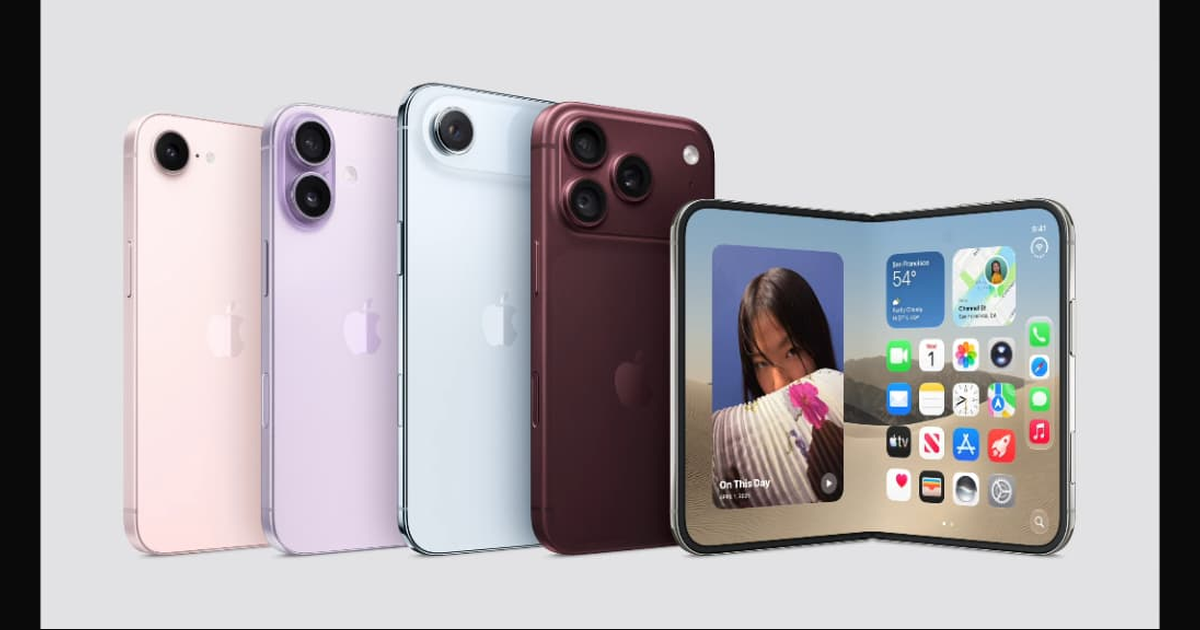
Apple says the hinge is engineered from more than 100 components. It supports the centre of the display, holds the panel flat when open rather than letting it bow, and closes with what the company describes as a secure magnetic feel.
The crease is handled at the display stack rather than the hinge. Optically clear adhesives let the layers of the screen glide across one another as it folds, so the panel is not repeatedly stressed along a single line. Combined with the nano-texture finish, that is Apple's two-part answer to the visible seam every folding phone has had so far.
Build and durability
The frame and the hinge cover are grade 5 titanium. Ceramic Shield 2 covers the front and the back, which Apple rates at three times better scratch resistance, and the inner display gets its own scratch-resistant coating - a sensible addition, since the inner panel is the softest surface on any foldable and the part most owners worry about.
The whole device carries an IP68 water and dust rating, which is not a given on a folding phone and is one of the harder engineering problems in the category.
The cameras
- ▸A 48MP Fusion Main camera with zero shutter lag and an integrated optical-quality 2x Telephoto, so the common portrait length comes out of the main sensor rather than a separate lens.
- ▸A 48MP Fusion Ultra Wide - Apple states it is the same unit as on the iPhone 18 Pro models.
- ▸A Center Stage front camera that can take photos and video in any orientation automatically.
- ▸A FaceTime camera underneath the inner display, so the large screen has no cutout in it.
Video tops out at 4K120 in Dolby Vision. The under-display camera is the interesting one: the A20 Pro's display engine was built with dual-display and under-display camera support, which is to say this phone's silicon was designed around this phone's shape rather than adapted to it.
What iOS does differently here
The software changes are few in number and large in effect.
- ▸Split View puts two apps side by side on an iPhone for the first time, including two windows of the same app - two Safari windows, for instance.
- ▸StandBy has been reworked so the Duo enters it on either display when you set it down, which is what makes a phone that stands up on its own hinge worth standing up.
- ▸Lock Screen controls move to the side to reclaim vertical space on the taller closed display.
Split View is the feature to actually try in a store. Every other spec on this page is a number; that one is the reason a folding screen is worth carrying.
Chip, modem and wireless
The Duo runs the A20 Pro, the same chip as the iPhone 18 Pro, which Apple rates at up to 35 percent better sustained performance than the iPhone 17 Pro. Sustained is the operative word on a device this thin - peak numbers are easy, holding them is not.
Connectivity is entirely Apple silicon now. The C2 modem handles cellular, including mmWave 5G in the United States and appreciably faster uploads than the previous generation. The N1 networking chip covers Wi-Fi 7, Bluetooth 6 and Thread.
Battery and charging
Apple quotes up to 31 hours of video playback using the inner display and up to 44 hours using the outer one. Those are the two ends of a range rather than two separate claims - real use lands between them, and launch coverage has put an even split at roughly 24 hours.
Charging reaches 50 percent in around 20 minutes wired, or around 30 minutes on a MagSafe or Qi2 charger.
Price, storage and colours
- ▸256 GB, from $1,999 in the United States.
- ▸512 GB, 1 TB and 2 TB above that - the first 2 TB iPhone.
- ▸Two colours: star white and night sky.
- ▸Pre-orders open Friday 16 October; the phone is available Friday 23 October.
A note on two figures you will see quoted that Apple has not published: thickness and weight. The numbers circulating - around 9 mm folded, around 4.5 mm open - come from pre-launch supply-chain reporting, not from Apple, and no official measurement exists yet. We will add them when there is something real to add.
The short version
It is a $1,999 phone that opens into a small tablet and closes into a proper 5.4-inch phone, built in titanium, rated IP68, running the same chip as the 18 Pro with the same Ultra Wide camera and a main camera that covers 2x optically. The software addition that justifies the shape is Split View.
Everything above is from Apple's own announcement and product page. Where the company has not published a figure, we have said so rather than filling the gap.
Elsewhere on Runyard: what runs on the hardware you already own.
Browse Model Radar →Tools
Find AI models that fit your exact hardware. Enter your specs and get a ranked list instantly.
Newsletter