Contents
Tags

The iPhone Duo Folds. Its AI Ceiling Doesn't Move
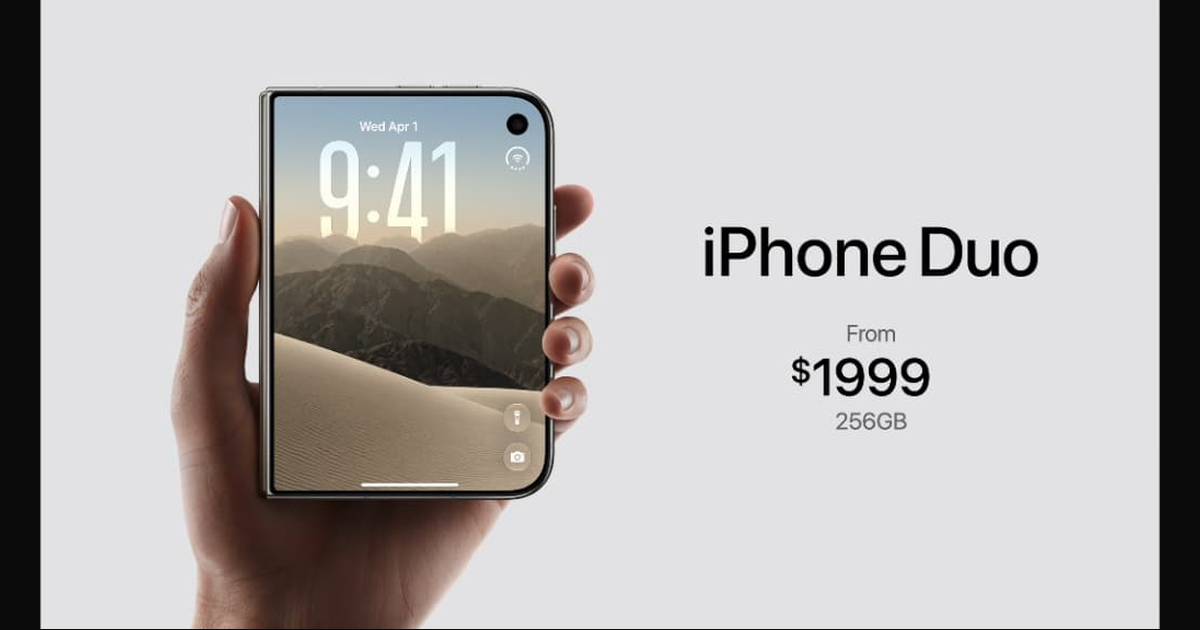
Apple's first foldable is the iPhone Duo: $1,999 for 256 GB, a 7.6-inch inner display and a 5.4-inch outer one, the A20 Pro and the C2 modem, two 48-megapixel rear cameras, pre-orders on Friday 16 October and on sale Friday 23 October. Storage runs to 2 TB.
Every review will be about the hinge and the price. Here is the part nobody will write: the largest iPhone Apple has ever made has the same ceiling on on-device AI as the smallest one, and quite possibly a little less.
Storage is not memory
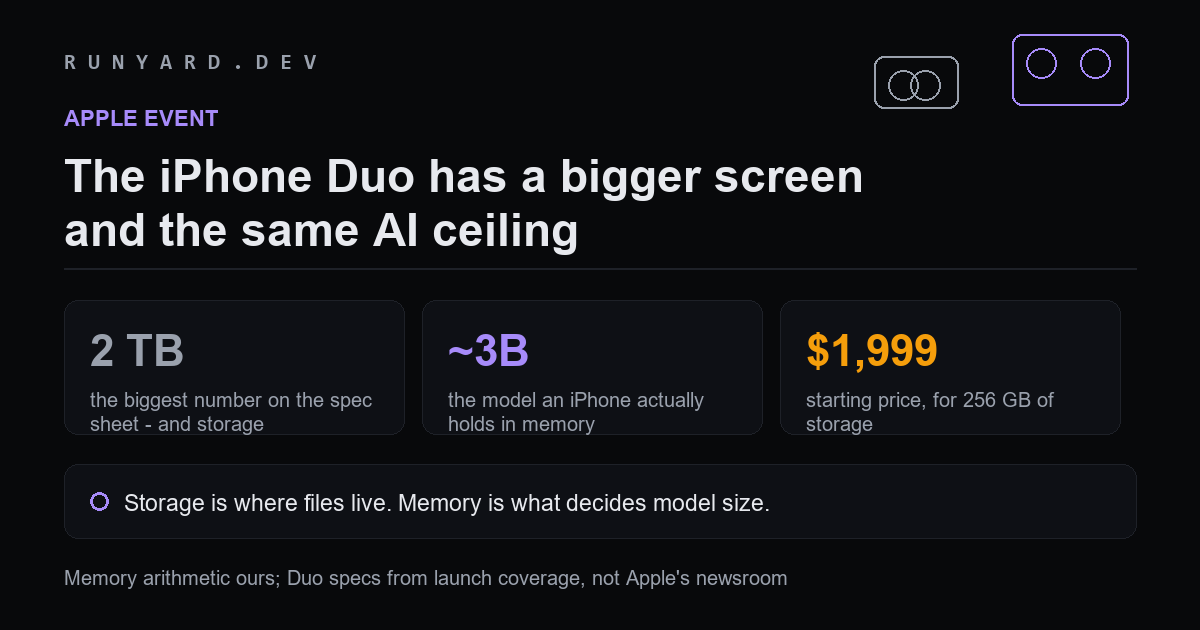
The biggest number on the Duo's spec sheet is 2 TB, and it has nothing to do with what AI the phone can run. Two different things are being measured:
- ▸Storage — where files, photos and model weights sit when they are not in use. 2 TB is a lot of it, and it is what the price tiers are selling you.
- ▸Memory, or RAM — what a model must be fully resident in to run at all. Apple has not published this figure for any iPhone, including this one.
A model has to be in memory to generate a token. Having a terabyte free on the drive does not help any more than a large bookshelf helps you read faster. This is the single most common confusion in on-device AI and this launch is going to generate a great deal of it, because the storage number is enormous and prominent and the memory number is absent.
If someone tells you the 2 TB iPhone Duo runs bigger AI models than the 256 GB one, they are confusing the drive with the memory. Both run exactly the same models.
What the Duo can actually hold
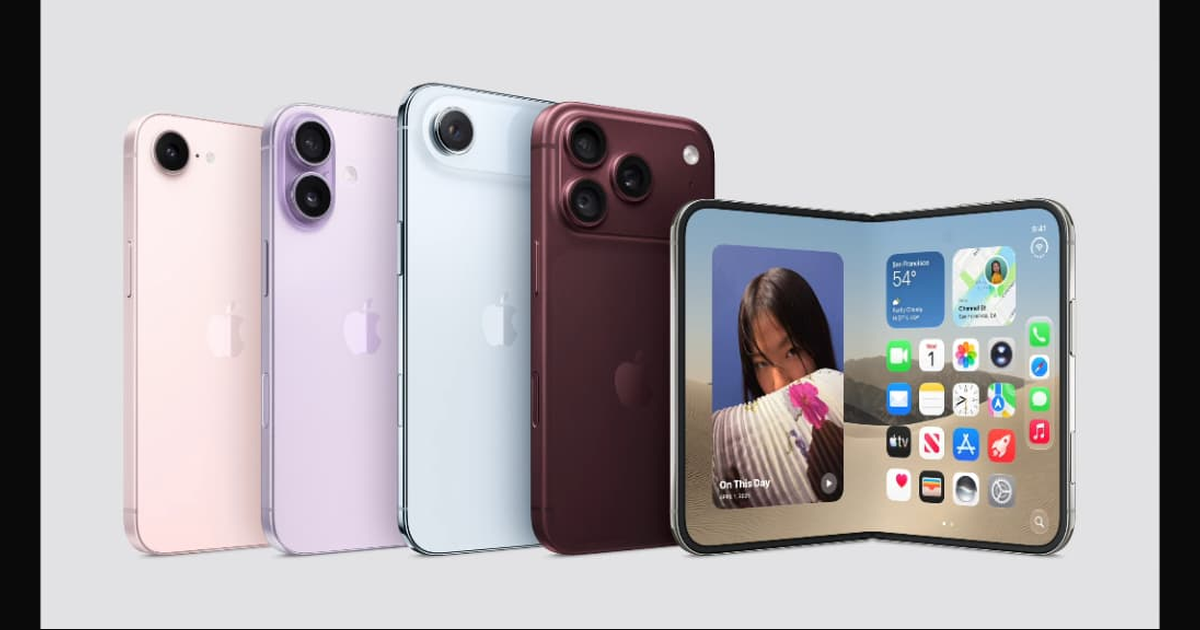
A phone shares its memory with iOS and every running app, so a resident model realistically gets somewhere between a quarter and a third of the total. On the memory figures reported for this generation, that puts an on-device model in roughly the 3B class at 4-bit — the same as the iPhone 18 Pro, because it is the same chip and, as far as anyone can tell, the same memory.
For scale, a 24 GB desktop graphics card runs a 27B model needing about 18 GB. The gap between a phone and a desktop is roughly an order of magnitude in parameters, and a folding screen does not close any of it.
The foldable might actually have less headroom
This is the counterintuitive part. A 7.6-inch inner display exists to show more at once — two apps side by side, a larger keyboard, richer multitasking. All of that runs in the same memory pool the model would use.
So the device most likely to have several apps resident simultaneously is also the device with the least memory left over for a language model. Nothing about the fold adds capacity; it adds demands on the capacity that is there.
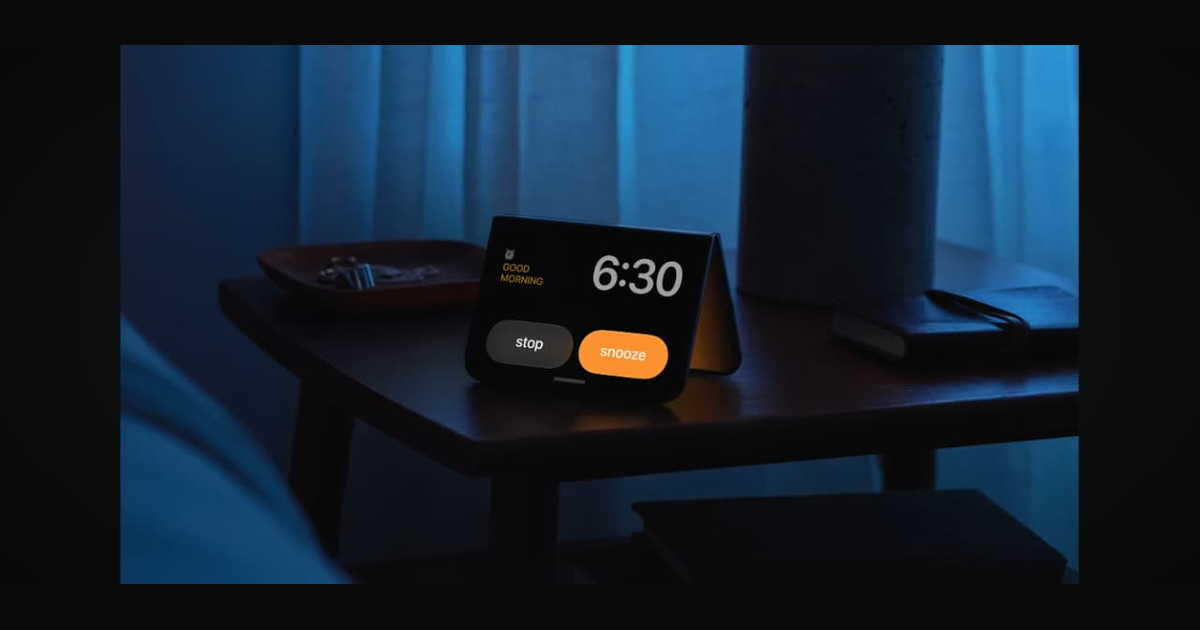
Apple's own demos make the point better than we can. The inner display was shown running a browser above a video call, a full messaging client with its sidebar and conversation open together, and a video editor beside its transcript panel. Two substantial apps resident at once, over and over. That is the reason to buy the device — and it is the same reason its AI headroom is no better than the 18 Pro's.
Whether that matters in practice depends on a RAM figure Apple has not given. It is a reason to expect the Duo's on-device AI to be equal to the 18 Pro's at best, rather than better.
What is worth watching instead
The A20 Pro brings something that genuinely does help, and it is not the fold. Apple states 50 percent more memory bandwidth than the A19 Pro, from what it calls the widest memory interface ever shipped in an iPhone.
Bandwidth is what sets how fast a resident model generates, so that figure translates fairly directly into tokens per second. It applies to the Duo exactly as it applies to the 18 Pro — same chip, same benefit.
- ▸Bandwidth improved by half, and Apple said so. That is the real on-device AI story of this event.
- ▸Capacity is unchanged as far as anyone can confirm, and Apple said nothing.
- ▸Storage went to 2 TB, which is irrelevant to model size and will be quoted as though it is not.
- ▸The RAM figure will come from teardowns within a few days, and that is the number that decides whether any of this changes.
The bandwidth claim, and what a 50% increase actually buys.
Read the A20 Pro analysis →Should you buy it for AI?
No — and that is not a criticism of the phone. Buy the Duo because you want a folding screen, a very good camera and the newest thing Apple makes. Those are real reasons and it appears to deliver them.
Do not buy it expecting a meaningfully better AI assistant than an iPhone 18 Pro. Same chip, same bandwidth improvement, same memory as far as anyone knows, therefore the same models. The screen folds; the ceiling does not move.
One sourcing note, updated. This post went up during the keynote, when Apple's newsroom feed carried no foldable release we could retrieve, so the specifications came from launch coverage and we said we would revise against Apple's own figures. Apple unveils iPhone Duo has since been published, and two things changed: availability is 16 and 23 October rather than the September dates coverage reported, and the colours are star white and night sky. Both are corrected above. The memory arithmetic remains ours, because Apple still publishes no RAM figure for any iPhone.
Work out what any memory budget actually holds.
Check what fits →Tools
Find AI models that fit your exact hardware. Enter your specs and get a ranked list instantly.
Newsletter